It's Beginning to Look A Lot Like Fun*Run Time

It's ALREADY that time of year again: The ADAPT Fun*Run for Disability Rights is April 22nd 2012. Maryland's fundraising goal is $8,000 this year. Yes, that's right, $8,000

Donate $1! Donate $10! Donate $100! Donate $1,000! JUST DONATE so we can FREE OUR PEOPLE! http://adaptfunrun.org/runner.php?id=7 I thank you very much for your support!
Showing posts with label family studies. Show all posts

Thursday, October 13, 2011

I Made a Difference (A Disability Awareness Month Post)

Yesterday afternoon I was somehow drawn to point my web browser here. I don't know why I would do something so torturous to myself but I did. If you go way down on the page it says


[the powerpoint slide, right, says "Disability & The Human Service Worker October 24th 2007"
The department collaborates with community agencies to sponsor workshops and professional and family education. Annual events include a Disability Awareness Workshop [emphasis mine] a Supervisor Training Workshop, and a workshop in partnership with The Leukemia and Lymphoma Society on relevant issues for families living with childhood cancer.
So of course I was drawn to click on the link below that, which leads to a page that has a whole blurb on the workshop:
Disability Awareness Workshop

This workshop is held each October [for national disability awareness month] and is designed to raise student awareness and understanding of individuals with disabilities. In addition, participants are informed about available resources and potential careers. In 2010, over 180 undergraduate students, faculty and community professionals attended. The 2011 Workshop will be held on Wednesday, October 26. This year's featured speaker is Alison Malmon, founder and executive director of Active Minds. This nonprofit organization develops and supports student-run chapters at colleges and universities in order to educate students and raise awareness of mental-health issues.
If you click on the tags "independent study" and "workshop planning" below, you'll note that this workshop was my baby. I initiated it a week before Thanksgiving 2006. It took until March until I found out I was approved to do it. I waited four long agonizing months, and then spent 7 more agonizing months planning it. It was arguably the most difficult thing I've ever done in my life. I spent most of those 7 months running around like a chicken with its head cut off. But it was worth it. It was phenomenal.

[The 2007 student panel. Please don't ask me why there are no men there. ARGH!]

This is something I wanted to work and be so successful that it would continue, and clearly it has. On the feedback sheets I got comments such as:
"I feel this seminar has changes my outlook on my field in family studies"

"it is critical that the public be made more aware of workshops like this one. I would suggest that professionals spread the word in some way perhaps and evening at a religious institution (church, synagogue, etc.), a fraternal organizations, etc."

"very nice idea! I really enjoyed myself! Even if you are not going to be working with people with disabilities it is beneficial to be informed about society and life"

Looking at MY WORKSHOP (for it will always be my workshop) placed so prominently on the department's website makes me feel good, of course, but it also makes me feel horrible. It makes me feel horrible because I have done nothing with my life since then. My life is one giant pit of nothingness. A person who can change the world like that, that person should...


I stopped myself from finishing that sentence. It won'tever do me any good to finish it. Instead of dwelling on what I should have accomplished since then, I thought about what I did accomplish. I singlehandedly, just by getting mad one day (that post gives a good breakdown the workshop) and deciding to fill a hole in the instruction of many students who will go on to become professionals working with disabled individuals, changed the lives of thousands of people.


2011 will be the 5th annual (!!!!!!!) Disability & The Human Service Worker workshop, and I imagine by the end of this month about 700 students and professionals will have attended the 3hr workshop at least once. If it still does what it's supposed to, if the workshop still brings a lifespan multidimensional view to disability, if it still focuses on peers in a way that a clear connection is made between disability and the audience's (majority 18-23 year olds) life; if people still learn that disability is not a tragedy, that it is many things, least of which is a diagnosis; if people still learn to look at the individual first and what that individual can offer, instead of the narrow view of disability many had before, imagine what kind of impact that can have.
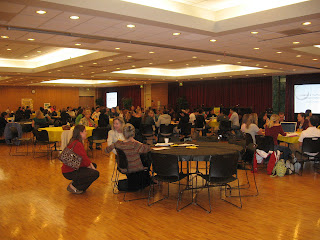

[right, a crowd shot of the 2007 workshop]


Whether or not you chose to work in a clear cut disability related job, disability is everywhere. Imagine just how many clients each of those individuals will come in contact with over the 40 years they will be working, and how differently they will interact with those clients and their families. The positive impact of a three hour workshop won't last for all 700 people, I'm not delusional (It clearly didn't make much or any of an impact for some that were already professionals [and that's just one example of their horribleness, check out some more]) but even if it has made a lasting impact for just 100 people, look at what an impact I made on the world. Look at what an impact just 1 person can make on the world.


When I look back at myself at that time I do so with a large degree of detachment. I don't see me at all (although clearly I'm the one in the pony tail in that second picture), and I can't figure out what being possessed me. I don't see myself as someone who can execute small things, like hygiene and basic cleaning. Forget about changing the lives of thousands. Who me? NAH! You're delusional. Not me! But clearly I did -- it's right there on the website.


And if I did it once, I can do it again. Even if I am a few years rusty. It's not about what a person should have done, it's about what a person can do. And clearly I can do. Even though most of the time I think I can't. I need to remember what I did, and stop focusing on all I didn't.


"One person can make a difference. And everyone should try." ~JFK

Thursday, July 22, 2010

Some Thoughts on Eli the Bipolar Bear

After receiving the book a few weeks ago and showing it to some of my friends (some bipolar and some with other psyc diagnoses) & my therapist I thought I would share our comments.

  1. I had a problem with the fact that Eli's psychologist is the "Wise Old Bear," a male, then one of my male friends made a quick comment on feminism, but I can't help it, I read feminist blogs and I've had experiences with so many different shrinks over the last 2 decades (9, 3 male and 6 female, ranging in age from their 20s to their 60s) that I have a very strong personal opinion on what I like. So way to perpetuate a sterotype...
  2. AC said she didn't mind the "Wise Old Bear" thing so much, but Eli's medication is termed "special tasty little fish," which hit me as cute at first, he's a polar bear and there's this Rx label on the bucket of fish, but I can see what she's saying about how we present the idea of medication to little children.
  3. CM commented on the fact that at the end of the book, it was presented as almost like after just a few weeks Eli was perfectly fine, and the world just does not work like that. To paraphrase what another friend once said, the road to remission is 2 steps forward and 1 step back.
  4. My therapist thinks that the book is GREAT and that the pictures are GREAT and are what make the book. They are what will capture kids' attention. She also brought up something I had not thought of which is that kids' are more receptive of cute furry animals as opposed to if Eli were a human boy. They find books about kids going through stuff more boring. Really???
  5. We both wonder why I had to get it interlibrary loaned from all the way in Norfolk Va and why there aren't more libraries that carry such an important book. Interlibrary loan ships from the closest library and Norfolk is hours away.
  6. Lastly I think it's cool that the author of the book has a degree in Family & Child Development. So cool that I even shared it with my class. When you discuss careers that family studies majors are qualified for after graduation, no one ever mentions children's book author.

Thursday, February 11, 2010

What's Your "Elevator Definition"?

A week and a half to 2 weeks ago I was in class and my professor explained what an "elevator definition" is. She is both a certified child life specialist (CCLS) & a board certified art therapist (ATR-BC) and those are not something most people know anything about. Although I hope my readers know what a child life specialist does. I talk about it A LOT. She said when she worked in a hospital someone would jump on the elevator, look at her badge and ask her what a CCLS or an art therapist does, and she only had the length of the elevator ride to sum it all up. That's HARD.


[image description: a close up of a hand pressing an elevator button found through a google image search that brought me to another great blog post about elevator discussions]

So she asked us what family studies is. Another hardish one. I've been in school so long I think I've perfected it. Most people just say "it's like social work," which it can be, except that family studies is SO MUCH MORE. I'm guilty of that sometimes, especially if I catch a cab either to or from school. Cab drivers like to ask me what my major is and I say social work just because it's easier. My school doesn't even have a social work major. So that wasn't allowed. My elevator definition of family studies is that "it's a mutt--a little of this, a little of that. I've taken classes in sociology, psychology, education, family law, sexuality, parenting, all sorts of things." Don't ask me to explain what a certified family life educator does though, I haven't gotten that far, I'm far from being certified.

The point of this post was not to talk about family studies, but rather to talk about what happened in my early childhood class last week. Cultural competence is BIG in school these days and the professor wanted us to talk about our culture. 12 white women, all early to mid 20s, presumably middle class (but maybe not), from Maryland, New Jersey, or Long Island most likely, majority Christian although I'm sure there were 2 or so other Jews in the room, stared back at the African (as in she was born in and spent a large portion of her life in Ethiopia) professor with blank stares on their faces. So much for cultural diversity.

Being the obnoxious person that I am, always wanting to make everything about disability, always wanting to change people's perceptions, I went on my "I consider myself bi-cultural" spiel. This time she was actually really interested. Really wanted me to explain, really wanted to understand. Except I couldn't. I really feel like I did a crappy job. I was put on the spot. Usually I have time to prepare. I said something about going to DC in April and how comfortable it is being with people just like you, who have had the same experiences as you, faced the same discrimination as you. That's good, but I can do better. I just don't think I did disability culture justice. What about our allies? You know those people who aren't crips but are so into the disability culture scene that you have to stop and think to remember that they're actually able bodied. I totally excluded people I LOVE.

So I need a better "elevator definition" of disability culture. Does anyone have a better one they use? An easier way to sum it up? How about other things? How do you sum up other complicated topics / concepts within the span of an elevator ride?

Monday, March 23, 2009

HB281 is now SB907

The bill I submitted written testimony for has passed the house and is now being heard in the senate tomorrow afternoon. I will be schlepping to Annapolis to testify in person this time because it is on a better day of the week. This will be my first time taking paratransit somewhere that far. It could be interesting... If you care at all, my revamped testimony is below, and if you live in Maryland, find your state senator, contact them and tell them to pass it.

------------------------------------------------

My name is Cheryl *censored*. I am a senior Family Studies and Community Development Major at Towson University and am looking forward to spending my life mentoring children with disabilities after graduation. I am here today in strong support of SB907.

I have been involved in disability rights/awareness for the past 9 years. I started speaking to groups when I was just 15 years old, through a program run out of Montgomery County Public Schools, Montgomery Exceptional Leaders. After high school I continued seeking out speaking opportunities on my own. I have spoken to children as young as 9, and have done several professional training workshops.

I have chosen to work with children with disabilities because I've witnessed first hand the high comorbidity rate between having a visible disability and depression. It breaks my heart to hear teens and peers talk about feeling worthless just because they can't drive or have some scars from surgery. It doesn't have to be this way, people don't have to focus just on what they consider to be their negative aspects, although isn't that human nature? Doesn't EVERYONE?

SB907's emphasis on educating K-12 students will help ALL students, not just students with disabilities, because the curriculum will help students to learn that there are many factors that make people who they are. It will also help to foster a sense of pride in students with disabilities by introducing them to famous people who are just like them—something I wish someone had done for me when I was a kid.

I was also pleasantly surprised to learn that SB907 places a significant emphasis on post-secondary education, something I have focused on in recent years. Family studies majors graduate prepared to work in a variety of human services jobs. Many of my fellow graduates will end up working front lines with children and/or families touched by disabilities, and after interacting with them and hearing a free association with the word disability, I was more then frightened by my vision of them interacting with disabled clients in the field. I knew my department wasn’t doing a good job preparing graduates to work with this population so I took it upon myself to undertake a very long and overwhelming independent study. For about a year, I poured my heart and soul into creating a three hour disability awareness workshop for 120 Towson University students enrolled in various Family Studies classes.

Preliminary data from that initial workshop shows overwhelmingly how well it worked. Students responded that they learned things such as disability etiquette, the impact of disability on the individual and family, and the need to view each person as an individual, among other things. The workshop was viewed by the Family Studies Department and other associated Towson University departments (Disability Support and Towson University Outreach) as such a success that it is offered as an independent study to a senior Family Studies student annually. The Oct 2010 workshop will be the 3rd annual. It is my greatest wish that disability will start to become included within lectures covering cultural competency and that something along the lines of my workshop can be replicated on all of the campuses across the state and attended by every student in a human services major.

Please support SB907. Your support means a lot to everyone that is, has been, or will be touched by disability in their lifetime.

Thursday, July 10, 2008

SEX: The Elephant in the Room

Over the last 8 months that I have been blogging here there has been a fair amount of discussion on sex, as there should be. Everyone loves good sex, don't they? But no one ever wants to talk about sex. In fact I just took my final exam for adolescent psyc, where of course there were questions about sex. How are young adolescents exposed to sexual information? Their friends--other 12yos. What does a 12yo know about sex? Nothing really. Where do those friends get the information that they get? 15 yo siblings/friends. 15 yos may very well be having sex, but do they really know anything about healthy, safe sexual relationships? I highly doubt it. In my opinion, the ones who do are the ones that at least wait until college to have sex. They're the smart ones. Pregnancy, STIs, they don't seem like they'd be much fun. Where are parents and/or other adult role models?

Add disability into the mix, and life becomes tragic. To me at least. I've been bipolar for the last 8 years. Love my meds, but I only got those this last winter. Most of the time I've been depressed. Usually just a little depressed, but I've had my share of bad episodes as well. Why am I depressed? SEX. On the list of things that make me depressed, sex would be #2. Sex on rare occasion has increased my level of depression pretty drastically. Well, not sex, I'm misstating myself a bit. Desirability. I wasn't interested in sex at that time, I just wanted to be sexy is all. And what is wrong with a 16 yo wanting to be sexy? Nothing. It's perfectly healthy. I hope to work with teens who have complex medical needs. If one of them comes to me and isn't experiencing the same issues I did, that's when I'll get worried.

I wrote another post about sex back in January. In it I spoke a little about not feeling desirable because of my intense belief that all guys would perceive me as a huge burden. What 16yo AB boy would ever be caught dead with a 16yo gimpy girl? And forget about finding a crip, there was no way I'd even consider doing that. This is the biggest load of crap, but I walked around with it floating around in the back of my head for years. That'll make somebody depressed. It's ableism at it's finest, and I have peer reviewed journal articles to prove it.

Your final paper in Research Methods in Family Studies has to be on domestic abuse. It is a much wider topic then you think at first glance. There were 14 people in the class, and I don't think anybody had the same focus. My paper was on physical and sexual abuse of woman with disabilities of course. An estimated 25-33% of AB woman are abused while an estimated 40something- 60something or 70ish% percent of disabled women are abused. That's double. It's a very serious problem. There are several reasons. I turned in that paper over a year ago, let me see if I can remember.

  • Lack of suitable PCAs. Some PCAs demand sexual favors in order to help you shower or whatnot. Or PCAs or family members caring for you start to burn out and take it out on you. They beat you. And if you can't shower or even get out of bed by yourself, what are you going to do? You're going to take it. I've heard enough griping on here about people's PCA issues. If you fire one it's going to take effort to replace him/her. Another reason to stay with abusers is our lack of financial security. At least 70% of working-age PWDs are below the poverty line. If your dad's hitting you but he makes a 6 figure salary and you're on SSI, are you really going to leave?
  • Lack of education. This refers to general education, sex education, and cognitive levels. People don't put disability in the same sentence with sex. We don't get taught about sex because we shouldn't be having sex. In terms of cognitive levels, you might just not know that being molested is wrong. You might think that's what people do. People who have higher cognitive levels are much more likely to pick up on this whether or not they have received the best sex ed.
  • I'm not sure if there was another reason,or if I combined reasons. I'll have to look at my old stuff. The last reason, the overwhelmingly highest predictor of partner abuse according to my research, was socital devaluation. Just plan old ableism. I'll stay with this guy because if I leave him I'll be all alone. Who would want me? I don't deserve anything better then this scum, so I'll take it. He's all I can get.You, me, and plenty of women in the 5 studies I read will all admit to it. There's a reason that this article is on this site. I'm glad I value myself more now.

I started this post in response to the article posted yesterday, but have decided to respond to all 3 news articles floating around this site:

Is it OK for Disabled People to go to Brothels?
School Helps Disabled Teens Find Love & Sex
Hospice Helped Man With Duchenne Muscular Dystrophy Lose His Virginity

Here's a question, all 3 of these articles are from British news. Why are the British so much more open about dealing with issues related to sex? Why aren't Americans or Canadians tackling these issues as well?

The article from yesterday hit a bit of a nerve with me. Then I remembered the other articles. I just don't agree with PWDs going to prostitutes. If you're competent enough and have the capacity to make decisions of this nature for yourself, save your money, go find a good shrink and a sex therapist and deal with all of that negative self-talk in your head. Then go out and get a date. I know, there are some people on here who are thinking I'm from mars. It is just not that easy. No, no it's not. I'm 23 and I haven't gone on a date yet, never had my first kiss. Residual effects of spending adolescence feeling awful. Right now though I could care less. All I want more then anything in life is to pass my 50hr placement this time. Then I'll go out and find my mid-20s Jewish uppity crip (specific aren't I?) and have my way with him. After I pass my placement.

But I digress. What got to me was that Nick Wallis is only 22. What does it say about society that people give up that young? That they think their lives are that hopeless? "It was not emotionally fulfilling, but the lady was very pleasant and very understanding. I do not know whether I would do it again. I would much rather find a girlfriend, but I have to be realistic." Doesn't that say it all? I want to have sex. I have wanted to have sex for some time. But I am not going to pay someone in order to have some. I'm worth more then that. I will find my Jewish uppity crip eventually and then things will go however they go.

I sent the link to my adviser yesterday. She hasn't answered me yet, and there is a decent chance that she won't, that my question to her was crossing some sort of boundary. I tried to phrase it professionally being that this is my area of interest career wise and she has experience working with children/teens with chronic medical needs. "Wondering not what you think about this, but rather what you think can be done about this... Self esteem is a big issue with teens with chronic medical needs I think.... So the question is, how to work with teens so that they aren't getting depressed? ... I think [teen self-esteem/sexuality is] a major problem that needs some serious attention." Disabled teens I mean.

I do applaud the staff at Treloar's College for instituting the policy that they did. Can't we have more of that? I think, personally, that it would go a long way towards solving the problem.

Monday, June 16, 2008

Call For Papers--Just Found Out But Deadline's THIS Friday

CALL FOR PAPERS: ASSOCIATION OF UNIVERSITY CENTERS ON DISABILITIES ANNUAL MEETING

http://www.aucd.org/template/index.cfm Deadline: June 20, 2008

Proposals from all segments of the AUCD network and its partners are welcome, including individuals with disabilities and their family members, faculty, researchers, program directors and staff, graduate students, policymakers, administrators, and advocates. In order to ensure full participation of all attendees, pay special attention to the accessibility guidelines and related resources available on the AUCD website. Proposals that address the following topics are especially encouraged: changes and challenges of the future; international, national, and local relationships addressing collaborations across cultures and communities; strategies and present results that demonstrate the translation of research into practice and policy formulation; leadership development of student trainees and others; diversity and cultural knowledge and competence; involve multiple AUCD members and existing partners; address leadership development at all levels; and demonstrate research-to-systems-change outcomes and promising practices. Questions regarding the AUCD 2008 Annual Meeting & Conference should be directed to Crystal Pariseau or Laura Martin at AUCD.

~~~~~~~~~~~~~~~~~~~~~~~~~~~~~~~~~~~~~~~~~~~

I know I've talked a lot on here about my independent study (to the point of overkill probably), but I don't know if I ever mentioned that we tacked a research study onto it. What's the point of putting all of your blood sweat and tears into something if you then have no idea if you actually did what you set out to do? So we did a little pre/post-test, using an established scale, but I don't have it with me and I can't remember what it was. We're hoping that in the course of 3 hours we were able to alter students' ableist thinking. Even if just by a tiny bit. So you may ask, "Did you?" Well, I have not a clue. The professor in charge of number crunching couldn't start on anything until about 4-6 weeks ago. She was finishing her disertation, teaching 2 classes, and she has a 1 year old. Althrough she still has a 1 year old and is teaching summer school, she's now a Dr., so she's able get to work on this. I'll let you know as soon as I do. From what I understand it's somewhat of a lengthy process.

In the email she sent me this morning, she asked me if I wanted to be included as an author. "You will have some responsibilities to prepare and present as the conference draws closer (if we are accepted)." My answer was "YES YES YES!!!!! Of course I do. You didn't even have to ask." This is my life's work after all.

I'm so excited!!!!!! If I could actually jump, I'd be jumping for joy. I'm an undergrad.

Friday, May 2, 2008

Some Meanderings About BADD & a BADD 2008 Disaboom Directory

I recieve tremendous support from everyone I'm around on a daily basis. 8 out of the 10 full time professors in my dept have either extensively worked w/PWDs, done peer reviewed research about PWDs, and/or have at least 1 PWD in either their family of origin or procreation (even if it is something "nontraditional" like cancer). Chances are that the other 2 do too and I just don't know about it. When I need an accomodation, I get it, no questions asked. When I don't know what it is that I need, they are the ones who initiate figuring out what it might be. They're pretty good at it (even if I'd rather not listen to what it is they came up with).

All of my close friends are multiply disabled as I am, and are either finishing up their undergrad degrees, in their first year of grad school, or are in their first year working post-masters degree. Last night I had a conversation with one friend about our sensory stim needs and talked with another about voice intonation and some such thing. Sometimes I have conversations with friends about medications. A friend with CP decided to stop at target on her way home from work yesterday. She also decided to walk home from there. It's a 2 sec car ride but it took her 40mins on foot. It would probably take me 30mins. She had a heavy backpack with her in addition to what she went there to buy (was she crazy???). I know EXACTLY how she felt when she walked in the door. The only way you know what that kind of exhaustion feels like is to experiance it yourself. It's not something that can be explained. I surely can emphasize with her. I know exactly why she did it without ever having to ask. If it was me I would have done the exact same crazy thing in a heartbeat, knowing fully well just how crazy it was.

It's a wonderful feeling to be in an environment where everyone "gets" me. I say "gets" because no one gets me entirely. Yesterday was the 3rd annual Blogging Against Disablism Day hosted at Diary of a Goldfish. Stumbling upon last year's BADD inspired me to start this blog. Reading BADD posts lights a fire within me. It provides me with a level of comfort that I'm not sure I can clearly articulate in words. Sometimes I feel more connected to those in the blogsphere then anyone else. My friends and professors are not activists. Fighting the good fight is on a whole other plane then just having first hand experiance with/as a PWDs. I have such a strong driving force behind me, and knowing that so many of you do too is what brings me that comfort. I always know that I'm not alone, but it never hurts to have that reinforced.

The official BADD directory is long and very extensive. I hope to read through every post and comment here about my favorites, but it's the end of the semester, so that isn't going to happen anytime soon. What I thought I'd do is link other disaboomer's posts below so that they are all in one spot and don't get lost in the shuffle. If you're a disaboomer and posted on your offsite blog, please comment. I'd still like to link you.

In alphabetical order:

Attila the Mom (on her offsite blog): Little Pitchers Have Big Ears
CherylBeryl (the official post): Focus on Your Needs: BADD 2008
CherylBeryl (the unofficial post): Tiny Tims & Supercrips
Nightengale: Anyone Else Doing Blogging Against Disablism Day?
Veralidaine: Why Disablism is Your Problem, My Problem, and Everyone's Problem
Vicki (a slightly late post): 5 Ways the Internet is Important to Me

Happy reading!

Monday, March 31, 2008

DISABILITY: Just a Part of Who You Are

Today I did my talk on disability and the family. I've begun to start with "What is the first thing that comes to mind when you hear the word disability?" I got the standard answers, but today was the first time that I got "Disabilitiy means handicap."

"Can you expand on that?"

No

Today was the first time I chose to speak about how bipolar affects me, and I really wowed myself. I spoke in December but it didn't come up and at that point I was in such a horrible state that I really had no clue how it effects me. I like to talk on panels best. I feel that it is better to learn about disability in the plural sense as opposed to the singular sense. Disability is not singular. What I found today is that I am now my own panel. I am proof in and of myself that what is invisable affects someones life as much as what is visable.

Afterwards I got "I never realized that disability can also be mental and other things and that cancer is also a disability." Afterall, I had to talk about my family, and both my mom and uncle have cancer.

And Ms "disability means handicaped?" She said "You know, really a disability is just a part of who you are." That was the best thing I heard all day. It lets me know that I did my job.

The professor said afterwards that I really inspire (gag me) everyone, including herself, to really begin to think about things in a different way then they did before (I took back the gag in my head). That's the point of it all.

Wednesday, March 26, 2008

How I Used my Independent Study to Break Out of my Shell

For those of you who are visiting my blog for the first time, or have not read some of my earlier posts from January, I completed an independent study from April to November of 07 where I planned a disability awareness workshop. This post is in direct relation to that.

---------------------------------------------------------------------

I learned quite a lot from the experience of my independent study. One of the things that I have learned was how to really stand up for myself. My department head can be very scary. That is a bona fide fact. It took a lot of courage and conviction to go into her office last year. I don’t know very many people my age that could do it. After that, I had to face a room full of authority figures and muster up the strength to be in charge of them for once, as opposed to them being in charge of me. Overall, it took a lot of passion and a strong sense of principles to be able to coordinate an event that seems daunting to people twice my age. After showing so much chutzpah throughout it all, how could I then go back to shying away from difficult situations again? While I’ve always known how to stand up for myself, to advocate for myself, I used to just pretend to do it. I would sort of do it in unimportant instances while I would let someone else fight my real battles because it was easier that way. Not anymore.

My main goal throughout whole process of my independent study was never explicitly stated anywhere on the contract that I made for it. It is a subset of “To develop the skills associated with planning and implementing an educational workshop for pre-professional students.” My main goal was (to quote my advisor) to learn how to become less “explosive” when interacting with other people. That was something that was unbelievably difficult a year ago. It probably took just as much energy to focus on not being explosive as it would have to continue to be explosive. Unfortunately, I think I became explosive because, for whatever reason, I never developed great expressive language skills. Being explosive was a good fallback. My expressive language skills are still very far from where they need to be, but they are so much better. If given the choice, I would still prefer not to confront someone about a highly personal or highly professional issue in person. It takes too much processing for me to get thoughts to come cohesively out of my head, but I have at least been able to perfect how to do this in writing. When I express myself through writing I am not right in front of the person and I have the extra time that I need to process my thoughts instead of having to think on my feet.

Where I have been most impressed with myself is how I handled all of the recent meetings I've had to have with faculty members in my department. I wasn’t defensive, and I wasn’t blaming other people or coming up with excuses. For once, I really did start to become open to what everyone had to say. That isn’t me. Everyone else is supposed to be wrong. Instead, I walked out of those meetings in utter shock. Somehow all of these “I statements” kept flying out of my mouth and that wasn’t anything I was purposely intending to do. It just happened, and it worked. To quote my last blog carnival post, "what seems so odd to me is that people think more highly of me now that I am actively seeking/accepting help then before when I was just as actively pushing it away. Logic says that it should be a sign of weakness.” It is often hard for me to interact with other people because I don’t know how to do feelings. I usually either do explosive or funny. Since I don’t do explosive so much anymore, I’ve started focusing all my energy on not doing funny. There are even less situations where funny is appropriate.

What has been most helpful to me (besides my medication, which might turn out to be a god send) was not the planning of the workshop in and of itself, but that planning it necessitated working very closely with several faculty members from my department. The Family Studies department is very cohesive in both its ideology and structure and I believe that this provided me with the appropriate framework that I needed, which proved to be an invaluable asset. Instead of continuing to model the same people I had, who, now that I look back on things, also do not express themselves effectively, I think I inadvertently began to model the way that faculty were interacting with me. Hopefully I can replicate this within other environments.

Sometime in January I posted a list of 10 questions and answers, the last of which was, well, not really a question. It was “If I could tell my 11 year old self something… I would tell her that life isn’t going to get easier from here; it’s going to get harder, MUCH HARDER. So she should start practicing asking for help now, so that when she REALLY needs help she’ll know how to take it.” When I originally wrote that it was in direct reference to family issues and to trying to somehow make it through college alive, but it might be more applicable to apply it to the workshop.

I’ve spent my entire life having to prove myself to other people. For starters, the doctor who diagnosed me with having CP told my mom I was going to be retarded. This kind of stuff builds up, and I’m not sure that I’ve even completely proven myself to myself at this point. So what do I do? I go completely against what other people expect of someone with CP and do absolutely everything myself (an undisputed direct result of ableism). Even when I can’t; even when I shouldn’t. It is another default that I go to without question. This behavior is so ingrained in me at this point that it may be impossible to separate it out from who I am as a person.

Then what happens is that I’m very obviously drowning and either I am still in complete denial that I am in need of help or I fully realize that I need help, but at this point I have no idea how to get it. I can’t get help because I’m not even able to figure out what I need help with, in what way some other person could be of assistance to me. I have two problems. The first is that I can’t even work through situations in my head to be able to deduce which one thing is causing a problem. The second is my lack of expressive language skills.

I’ve spent so much of my life having to focus on becoming independent and it backfired. I spent all nighters working on the disability dictionary, and I exhausted myself running around like crazy so that I then fell asleep with the lights on, and I would freak out and have near panic attacks unnecessarily, because I have this overwhelming need to do everything myself. As I said before, it seems strange to me that people think more of me when I seek/accept help then when I don’t.

What else have I learned about myself? I’ve learned that I have real talent. Most of the time I haven’t thought very highly of myself. I have good reason not to. I will have taken six classes over again in order to graduate, and that’s not even counting all the classes freshman year I didn’t get grades for because it was decided that it was best for me to cut my losses and leave. When my parents were divorcing my mom went to court and convinced a judge that I was too disabled to work because I had no employable skills. She got me legally declared an adult dependent child because SSI is not as much money as child support is. I fully understand why she did it and I’d tell her to do it again— I’m an expensive person—but I never thought I believed any of it. It was just a ploy to screw my dad out of as much money as possible. But I think to some degree, even after the workshop, I really believe it. Basically what I’m saying is that on the one hand I’ve come really far towards having my life completely together, but on the other hand I’m still stuck in some of the same spots that I was in when I started. On some level a small part of me believes I really am incapable of holding a job. This doesn’t add up. I can no longer deny that I have somewhat incredible skills. How many people twice my age could have pulled off what I pulled off with so little resources? What I haven’t figured out yet is how to reliably harness those skills into any sort of a predictable outcome. My life has been like a game of Russian roulette. Sometimes I get lucky, and sometimes I don’t. I need to make sure that changes.

Wednesday, March 12, 2008

Disability & Its Effects on the Family

On occasion I have been asked by a professor in my department to speak to one of their classes about my personal experiances as a PWD. I'm always more than happy to do so. I could go off for awhile about why I must/why it is important for me etc etc, but that would be preaching to the choir. Anyway, at the beginning of this semester I took the liberty of emailing the 3 professors that teach family resources and volunteering myself upfront. Only one professor expressed interest, but unfortunately timing issues is preventing that particular presentation. I guess I'm flattered though that she thinks enough of me that basically, she's willing to take me for whatever she can get. What fits best is for me to come to her family relationships class. In 2 or 3 weeks I will be talking about disability's effect on family dynamics. I told her that this is not something I had done before, but that I was up to the challenge. Giving the same speech time and time again doesn't do either me or the people being "forced" to listen to me any good. There's one problem though. I believe strongly that the most effective learning comes from hearing first person accounts. I can talk on this topic long enough, I can even answer questions on it, but I'm the PWD, not the family member. I can talk about what things were like in my family, but in this particular case my older brother is actually way more qualified to speak on the topic. Am I getting my point across? I don't know if I'm asking for your input, suggestions, guidance, or what, but I thought it'd be good to throw the topic out into the blogsphere and see what comes of it.

Saturday, March 1, 2008

Looking Back and Moving Forward

I have a few reserve posts to use when it's been a few days but I have nothing to write about. They are things I have written for a grade, but apply greatly to the theme of this blog. The following is the end of a paper I wrote almost exactly 2 years ago for an assignment for my Family Resources class. The main part of the assignment involved completeing a minimum of 5 volunteer hours at a community organization. This just happened to be next in line, but it turns out it is very timely to be posting.

Yesterday I had a meeting with my advisor and my department head. When I left I managed to hold it together until I left the building and then proceded to cry for the next hour until I got ahold of my 2 best friends and they calmed me down. This is not the first time I have left a meeting with 1 or both of them and broke out in tears and I venture it will not be the last.

You can not just graduate with a degree in Family Studies, you must pick a concentration. My concentration is child life because that is what I want more then anything in my life: to become a Certified Child Life Specialist. They on the other hand have other ideas. In order to graduate with this concentration you must complete at least 1 hospital field placement. It is absolutely non-negotiable that you are not allowed to complete a hospital placement if you have another concentration. At that meeting I was told that even if I chose not to officially change my concentration on paper I would still not be allowed a hospital placement. Why? Well, child life has the most number of credits to complete. My transcript sucks, so they wonder why I choose to continue with something that is not working? I would like to say was not working. I did not know I was bipolar until October. They are judgeing me based upon something I had no control over. If I do poorly this semester I take full responsibility, but please give me that chance.

The other reason? I had a smaller placement last semester and they say it didn't go well. That there were problems. Besides the 2 of them there is the professor that taught that class and my supervisor who all know what I did wrong, but none of them will tell me. I tried to email my supervisor 6 weeks ago or so, no answer. I thought it went well. I tried my hardest.

The thing is, I know I suck at this. I've known for the last year and a half. I haven't gotten any feedback, but I see other volunteers. I'm not stupid. Doesn't it say something that I still desperetly want to pursue it? Sometimes I wonder why. I have skills in conference planning beyond belief. Why go into a field starting behind when I can go into another starting way ahead. Well because I believe deep down that this is what I was born to do. Tell me what skills I'm lacking and I'll fix them.

After talking to my friends for about 90 minutes and getting my head on straight I called the office. I have a 10am meeting with the 2 of them on Monday. Yesterday's meeting was on their terms. Monday's is on mine. My parents taught me many things growing up. They taught me to be independent. They taught me that CP does not define me. But most of all they taught me how to fight my battles. My parents gave me balls, and I intend to use them. If you read what follows you'll see why I'm putting my game face on and kicking some ass Monday morning. Wish me luck.

I know that they believe that they are acting in my best interest. I know that contrary to the professional boundries that they try to model (all human service workers need professional boundaries and how else are we supposed to learn them?) the 2 of them genuinely care about me. The concern that they showed when I couldn't get out of bed was amazing. I know that they want to steer me towards a path where I can succeed. What they are steering me to is a path where I will feel ashamed of myself. Where I will feel like a faliure.

Maybe I have already succeeded? For the first time I can say that I am an adult, not that I am pretending to be an adult (to which my advisor kept answering "you are an adult"). Except that this time I believe in my heart of hearts that the statement is finally true. No one, absoulely know one stands up to my dept head. She is one of the most indimidating people you will ever meet. Up until May or June the anticipation of having to meet with her would make me nauseous to the point of almost throwing up. Now in stark contrast I think she is a cute jewish mommy, but still, going in on Monday and standing my ground is a HUGE deal. I don't know of one student in my entire department who would take her on. If I have to I think I will make an appointment with the dean of the college of liberal arts. He knows who I am. Not just my face, but my name. I ran into him once and he didn't say hi. He said "Hi Cheryl how are you?" How incredibly cool is that? Back to acting in my best interest, because I went on a tangent, I'm sorry, but no one knows what is in my best interest except for me god damn it.

------------------------------------------------------------

Prior to volunteering at Mt. Washington I was slightly apprehensive about my ability to handle this experience. I have had previous experience working with disabled children at an overnight camp and found that I felt strong sympathy pains towards certain campers during the entire session. As a long time outpatient of the Cheverly location I wondered if I was too close to the situation. If it turned out that I couldn’t handle it, would I have to abandon my dream of becoming a Child Life Specialist?

What I have found during this experience was the complete opposite. Instead, volunteering at Mt. Washington has reaffirmed my belief that I am a natural in this career field. For starters, having experienced seven surgeries during my childhood has made me very comfortable in a hospital setting. This is an attribute that seems to come naturally to me but not to many others, as I have observed some adults become anxious when visiting a friend or family member who is in the hospital.

Secondly, my first hand experience with post-surgical rehab has made me very adept at adapting recreational activities to meet the needs of various situations. For example, in my first visit to Mt. Washington, I was asked to play UNO with a patient at bedside who could not sit. As I was leaving, my supervisor sort of apologized to me, stating that she realizes how difficult it must be to play UNO in that situation. After hearing that come out of her mouth I was slightly stunned. Two of my operations rendered me both unable to sit or stand for an extended period of time, and UNO comes to my mind as one of the most easily adaptable activities to that situation.

Volunteering at Mt. Washington is also beginning to help me develop skills that I am lacking. Disability has isolated me and I often find it very difficult to interact with my peers. I am very hesitant about walking up to someone and starting a conversation. This is a skill that is now required of me. Some patients with speech disorders are reluctant to engage in conversation with anyone, but such conversations are an integral part of their recovery. While I am not going to go up to another college student and ask them if they remember what they had for lunch yesterday, this setting does give me the opportunity to practice this skill in a much less threatening environment than a college party.

Lastly, it amazes me what an impact I can have on these kids without even doing anything. Last Friday I walked through the door of the CPAR unit wearing a skirt, which exposed several of my post surgical scars. I was immediately greeted by a patient who asked me if I was a patient there. Almost simultaneously as the word yes came out of my mouth, a look of shock and amazement appeared on the face of another patient who was sitting in a wheelchair near by. “YOU ARE?!?!?!” she replied. She then proceeded to open up to me probably much faster than she does with anyone else.

Even though I have only volunteered at Mt. Washington a short time, I have already learned a great deal. I have learned that a gesture that may seem small and insignificant to me (such as wearing a skirt, or playing UNO) may mean a great deal to someone else, and even have a lasting impact on their life. I am a role model to those kids just for being me. I am not just a “big person”, but a big person very much like them who is beginning to lead a very successful life. And that is not something that is seen very often in life.

Sunday, January 20, 2008

What I'm Teaching Professionals

The topic for this week’s disability blog carnival is “ what professionals should know about disability.” I am going to twist that around a little bit and write about “what professionals have learned about disability.” I feel like a broken record talking about my workshop so much but it’s my pride and joy. It’s my baby. For those of you who don’t know I spent a year of my life (Nov 06-Nov 07) completely consumed with planning a disability awareness workshop, Disability & the Human Service Worker, as an independent study for the Family Studies and Community Development Department at Towson University. My main goals? To teach future human service workers that people with disabilities are just like everybody else and to give them somewhat of a conceptual framework as to what disability actually is.

If you poll a bunch of family studies majors as to what their future career goals are, a popular answer is working with special needs children. Then you poll a few family studies majors as to what the first thought is that comes to mind when they hear the word disability. You get answers such as the elderly, people who cannot work, young children, and people in wheelchairs. My first thought to that? What the he!! am I then? My department is small. We take classes with the same people over and over. Even if they don’t know my name I would be willing to bet that 90% of family studies students know who I am. I’m hard to miss, being the token gimp and all. I am a 22-year-old college student in a very structured pre-professional university program, who just happens to have CP and bipolar disorder. I am neither elderly nor a young child. I do not work now, but I am a full time student and I volunteer 1-2 days a week. I will of course work after I have my degree. There is no reason why I should not be working. As to the wheelchair thing, I’m on the fence with that one. I happen to have 2 wheelchairs in my possession, but I don’t use them all that often.

My second thought? I would not want any of you working with my (fictitious) disabled child. In fact it scared me half to death to think that people being trained in the human services are left to go out into the real world with no real knowledge of disability whatsoever. My classic example? Say you don’t want to work with the special needs population at all, say you want to work in crisis intervention. Say you work at a battered woman’s shelter and a woman comes in with her son who is autistic. What then?

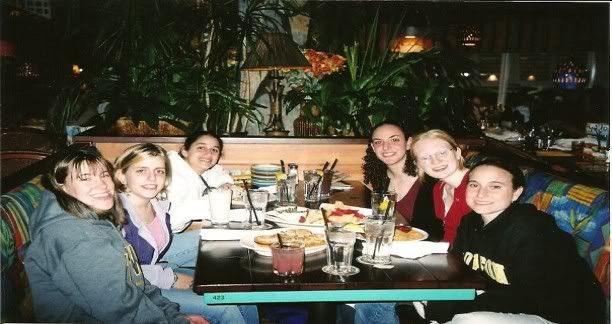
me & my friends out to dinnerMy workshop was 3 hours long and was divided into 4 parts. In attendance were 120 undergraduate students (mostly family studies majors, but I know there was at least 1 OT major there as well) and 30 professors, other professionals, or invited guests. The first part of the workshop was opening remarks by the dean of the college of liberal arts, the director of disability support services, and then me. Which of these Towson Students has a disability? How about all of them. I don’t like listing people by disability, but at this table we have CP & anxiety, CP & bipolar, dysgraphia & ADD, hearing loss and depression, legally blind as a byproduct of albinism, and ADD. That will teach them that we are just like everybody else.


We then immediately went into a 5-student panel where we talked about our experiences with disability. Our major emphasis was what we want (future) human service workers to know. On the panel we had me and the other person with CP mentioned above, a student with a TBI from a car accident, a student with oral facial digital syndrome, and a student with dyslexia & lupus. There were 3 family studies undergrads, 1 phys ed undergrad, and 1 speech & language pathology grad student. (insert sarcasm here) People with CP can get masters degrees? Geez, you learn something new everyday, don’t you? (end sarcasm) That will teach them that we are just like everyone else.

Then we had Disability Jeopardy. The categories were Name that Disability, Community Resources, Disability Related Professionals, US Law & Disability, and Famous People with Disabilities. The final Jeopardy answer was what is people first language? To level the playing field I hid all the answers within a disability dictionary. There were almost 4X as many definitions as there were Jeopardy questions, so I don’t think I was giving it away.

Lastly we had 3 professionals speak about their career working with people with disabilities. We had the director of Towson Disability Support Services, a therapeutic recreation specialist from Mt Washington Pediatric Hospital, and someone from blind & low vision services of voc rehab, who just happened to be blind. We also had many brochures out from various disability related organizations.

Like any good workshop there was a feedback form at the conclusion. What did you like? What could we improve? Etc etc. Out of 150 people we got 86 feedback forms back. The last question was please list the one fact that most stuck in your mind (it could either be the most shocking, most thought provoking, most interesting, etc.). I wanted to know if I really did teach people what I set out to teach them. Some of the responses are purely statistically based (i.e. almost 1 out of 5 people in the US have a disability) or about the professional panel. Others about the student panel I will list below:

• 14 people noted that everyone has his/her own unique story
• 3 people commented on how disability affects a whole family
• 6 people commented on how a lot of disabilities are invisible
• 7 people commented on how people with disabilities want to be as independent as possible and don’t actually want help (most of the time)
• 2 people noted that we should treat people with disabilities just like everybody else
• 1 person commented on the fact that I made a point of saying that disability means that we do things differently, not that we can’t do most things
• 1 person commented on the fact that we would rather people came up to us and asked us questions instead of just staring at us

So did I give future human service workers a conceptual framework of what disability is and teach them that we are just like everybody else? I think I did. Teaching 120 students was a good start. I feel like I am making a good dent towards eradicating ableism, but I also know that this is only the beginning. I am a woman who has just embarked on a mission. Come talk to me in 10 years. Will I have taught this to 1200 students? 12000 students? Aside from this particular workshop I have also spoken to established professionals. Will I have reached more of them? Will I have reached the parents of the children I will have worked with? How will this affect the world? How will this affect us? Well, more understanding should greatly level the playing field and reduce the frustration that is felt from doing mundane ordinary things like going to have a mammogram for example. With a more level playing field and less frustration we will have a greater worth in society as well as more time and energy to reach out to even more and more people…

Wednesday, January 9, 2008

Update on My DORS Meeting

For those of you who are following along:

So I went to my DORS meeting and I guess I seemed to jog her memory yesterday because when I went in she said it seemed like I was doing much better then before. They will still pay my tuition because I brought in the letter from my shrink stating why I droped my classes, but in order to do so they need a letter from my psychiatrist stating that she recommends that I take a reduced course load. For some reason they won't pay for people to go part time unless you have good reason. I don't understand. All they do all day is deal with people with disabilities. Shouldn't they be able to substantiate going part time just by looking at someone? The other thing is that they won't submit my paperwork to financial aid until I drop the classes I'm holding, because it screws things up if they get billed for extra $. If I hold the classes as long as I wanted to I won't have $ to buy my books, probably until the 3rd week of school. This means that I have to drop those classes TODAY. Going to call my adviser and see if she thinks if I were to change my mind I would be able to get these classes back. They're all in my department and my department head likes me. Don't think there's a problem, but it's always good to double check.


My Entry for Tomorrow's Disability Blog Carnival: Inconsistancies in the Media

I want to introduce myself to all the new readers who have found my blog through the disability blog carnival. I’m Cheryl, I’m 22, I live in Maryland and I go to Towson University. If you’d like to know more about me, click “about” over on the right. I hope that after you’re done reading this post you will continue to browse the rest of the posts that I have here. I know that most of them are a bit long, but if you have the time to get through them I think they are pretty insightful.

For my contribution to the blog carnival I’ve decided to write about the inconsistencies I’ve found in the way that the media covers people with disabilities/ disability issues. More specifically, I am going to reference three articles from my college newspaper, the Towerlight, in the order I found out about them.

diversityI don’t usually read the Towerlight, but late in September as I was leaving the gym I happened to glance down at the newsrack and notice that they had decided to do a special “diversity” issue. The cover of the issue features a full color border of faces of students of different races. It was just faces, so there was nobody in a wheelchair or on crutches or anything. Including myself I can think of 9 current students that they could have contacted to get a photo of, and I am sure there are more students who I don’t know. The picture on the left I got from the Towerlight website. It isn’t an exact recreation of what appeared in print, but It’s pretty close. I didn’t even have to open the issue for my blood to boil. I knew what the issue was really about. But I had to open it just to be sure. There was not one single article about religion, about students with disabilities, or about people with alternative sexual preferences. Don’t get me wrong, I’m totally fine with the Towerlight printing a special issue that focuses on race, but please call it what it really is. I wrote a letter to the editor that was printed in the following issue, and had several able-bodied friends thank me for doing so.

Dan "King Gimp" KeplingerTwo weeks later the cover of the towerlight featured an amazing article on artist Dan Keplinger’s gallery opening. I again wrote a letter that was printed in the paper, as I decided that if I was going to complain I also had to give thanks where thanks was due. Dan has severe CP and paints with a paintbrush attached to his forehead. The article somehow managed to portray him as just a regular (albeit famous) guy. It starts by talking about his paintings, briefly mentions his CP, of course goes on to mention his Oscar winning movie, then goes back to focusing on Dan’s paintings and who he is as a person. In the article Dan’s CP was very nicely presented as just one factor of what makes Dan, Dan.

A few days later I went on the Towerlight website and typed “Keplinger” into the search box, as I wanted to send the article to someone. Dan’s been at Towson for almost 10 years I think. In December when he got his MFA it was his 3rd degree from Towson. So of course I found that the Towerlight had written more then just one article about him. I found a 2004 article that made me livid. Here is the first sentence of the third paragraph: “Beginning his education in specialized programs and schools for children with cerebral palsy, Keplinger spent the first few years of his life adjusting to his disease.” The fifth paragraph states: “Keplinger refuses to allow his disease to be a crutch, and his self-given nickname, King Gimp, demonstrates his humor.” As I’m sure all of you know, a disease can be a disability, but not all disabilities are disease. CP IS NOT A DISEASE. I know that different people wrote all of these articles, but I cannot understand the differences in the use of language. At least I used this as a learning opportunity. Not long after, I guest lectured in a class where I had the students look at the three articles and then I discussed them.

When I found out that this was the topic of the blog carnival I started thinking about how this inconsistency flows over into other forms of media, like movies. There are movies that I own that are WONDERFUL and then there are other movies that are absolutely horrid and really piss me off. Then I started thinking about the inconsistencies in actual people with disabilities. There are people (the people reading this blog for instance) who are capable of really making a difference in the way things progress. We are how good articles, good movies, etc get produced because we know how to get our voices heard and how to get people to listen. Then there are others who contribute to the detrimental media portrayals These are people who either do not believe that their voices can be heard or people who have been conditioned (thanks ableism) to really truly believe that this is the way that we should be portrayed. Somehow I have a feeling that this is the larger group. If we could just somehow figure out how to recruit these people we would have more troops to mobilize and things would continue moving forward like they are but at a much faster pace.


Tuesday, January 8, 2008

If Not Now, When?

What I’ve learned about myself from doing my disability awareness workshop: First and foremost, I have two very strong personal creeds, which have guided most everything I’ve done this past year. The first is “don’t reinvent the wheel.” If someone’s done something really great before, it’s totally ok to steal their ideas. Not just ok, but I wholeheartedly encourage such behavior. I’m not talking about taking credit for things that break intellectual property laws; in fact, I’m not even talking about taking credit for any type of ideas. I will be the first to admit where I got something from. I just feel like why waste perfectly good energy coming up with things from thin air when sometimes things are basically served to you on a silver platter.

For my second personal creed, I’m going to quote Rabbi Hillel, who lived in the first century CE. “If I am not for myself who will be for me? If I am only for myself who am I? If not now when?” (FYI, Jews always answer questions with questions. It’s what we do.) I first heard this quote when I was 9 years old. Someone wrote a whole song around it that I learned at camp. I’ve never really thought about what it meant before, but I think it fits me perfectly. I think what it means is that you need to remember to take care of yourself and be true to yourself while always looking out for the needs of others, because basically, if you don’t do it nobody’s going to come along and do it for you. I really haven’t been the greatest at adopting this ideal into my life as a whole, but I feel like I’ve managed to do so in at least one area, and I guess that’s a start. I emailed my department chair because I saw a need; a need that no one else was going to fill. So I blindly jumped right in and did something about it.

I’ve been spending hours lately, since I started this blog, doing deep philosophical thinking about different aspects of my life. Really picking each one apart until I come to a definitive answer on whatever it is. Is it the right answer? I have no idea. But at least I feel like I’m accomplishing a whole lot more then if I were to spend those same hours watching TV. One of the thoughts that has popped into my head recently is that I am now the token gimp of the family studies department. I can’t very well say that I am the token gimp of Towson University. I feel like the amount of physically disabled students has increased even in the short time that I’ve been there, so of course I’m not the only one. And anyway, that honor has to go to Dan Keplinger (he is King Gimp after all). But if you factor in the fact that 6% of Towson students (aprox 1100 out of 19000) have identified themselves to disability support services and that most of those students have learning disabilities, and then you factor in the fact that according to a Towerlight article printed last spring there are only 175 family studies majors, you end up with just me. I could run off a fair list of family studies majors that have either learning or medical disabilities but I haven’t seen another person with a disability as overt as mine. Even before the slightest of thoughts about a workshop came into my mind I was the one that raised my hand in Trends in Family Life class and pointed out that the average person on supplemental security income (SSI) gets about twice the amount of money per month that a single mother with kids gets on welfare. Who else would need to know that? I am going to be on SSI in the foreseeable future.

Do I mind being the token gimp of the family studies department? Absolutely not. That’s a far cry from five years ago when I was ordering my powerchair—“No one’s going to be friends with me or even talk to me because I have a wheelchair.” The wheelchair and the crutches and not driving and things still bother me, but a lot less since I’ve gotten philosophical. If I didn’t have a wheelchair or crutches or if I could drive, I wouldn’t be the token gimp. Being the token gimp is important. It fills a need. I'm at an institution of higher learning, and I have single handedly provided students several opportunities to employ high-level critical thinking skills both directly and indirectly. Maybe someone I’ve been in a class with, who would have seen me in a restaurant (with food on my shirt of course) and automatically thought I was retarded has had a schematic shift, and is now many times less likely to make such erroneous assumptions again. Not that I’ll ever know, but I can hope.

Blog Widget by LinkWithin

Blogiversary

Get your own free Blogoversary button!
 
design by suckmylolly.com